How a 2012 art commission turned George Town's UNESCO walls into Malaysia's most photographed gallery
George Town's street art scene did not exist as a tourist draw until 2012, when the George Town Festival commissioned Lithuanian artist Ernest Zacharevic to paint a series of wall murals throughout the UNESCO World Heritage zone. His interactive pieces, which combine painted figures with real bicycles, motorcycles, and chairs mounted to walls, turned the city's crumbling shophouses into a scavenger hunt. Today, you cannot walk down Armenian Street without seeing at least three groups of tourists posing with a mural.
Two years before Zacharevic, the "Marking George Town" initiative ran a competition to physically brand the heritage area. The winning entry was a collection of wrought-iron rod sculptures by local artists, caricatures that tell stories of local trades and history with considerable wit. There are over fifty scattered through the city, all lit up at night.
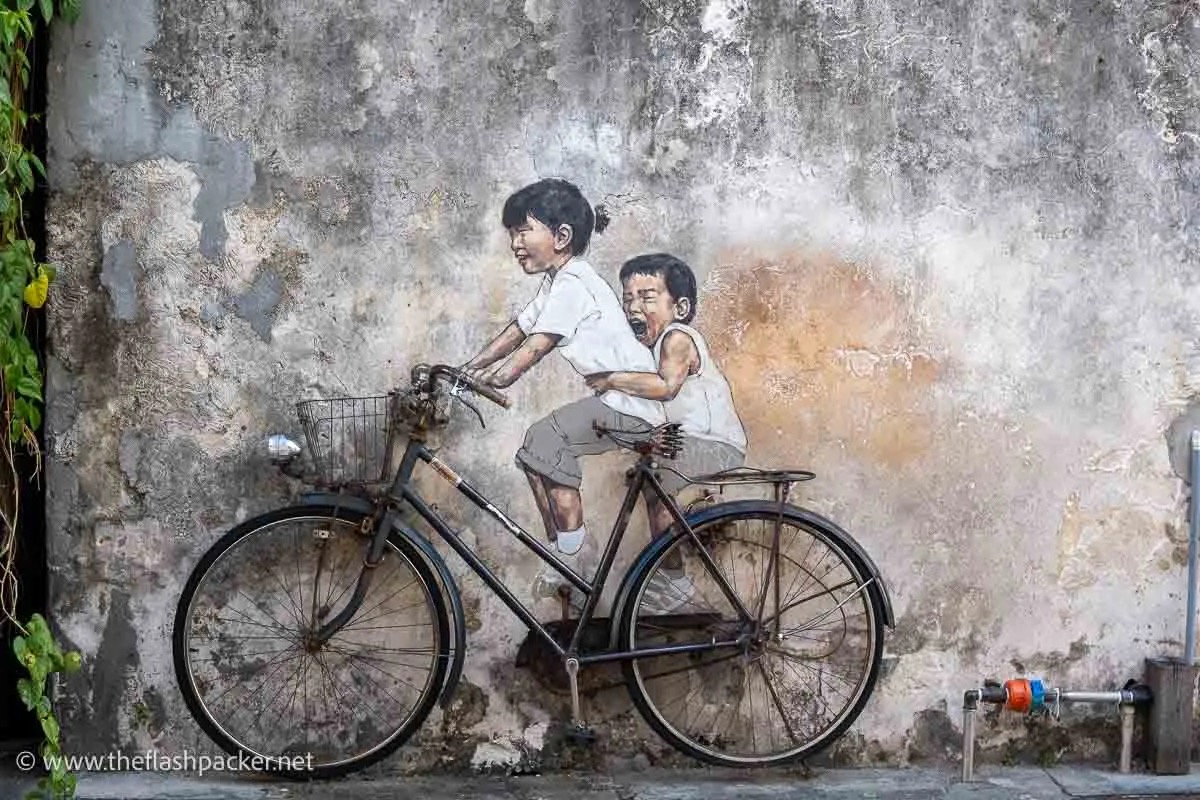
Little Children on a Bicycle (Ernest Zacharevic)
This is the mural that launched the whole movement. Two children ride a real bicycle mounted against a wall on Lebuh Armenian. Painted in 2012, it became so iconic that it appears in tourism materials representing all of Penang. The little boy clinging to the back, mouth open, is either overjoyed or terrified, and no one can agree which.
Get here before 9am if you want a photo without a queue of fellow visitors in it. Between 11am and 4pm, you will be elbowing people out of frame.
Address: 2, Lebuh Armenian, 10200 George Town
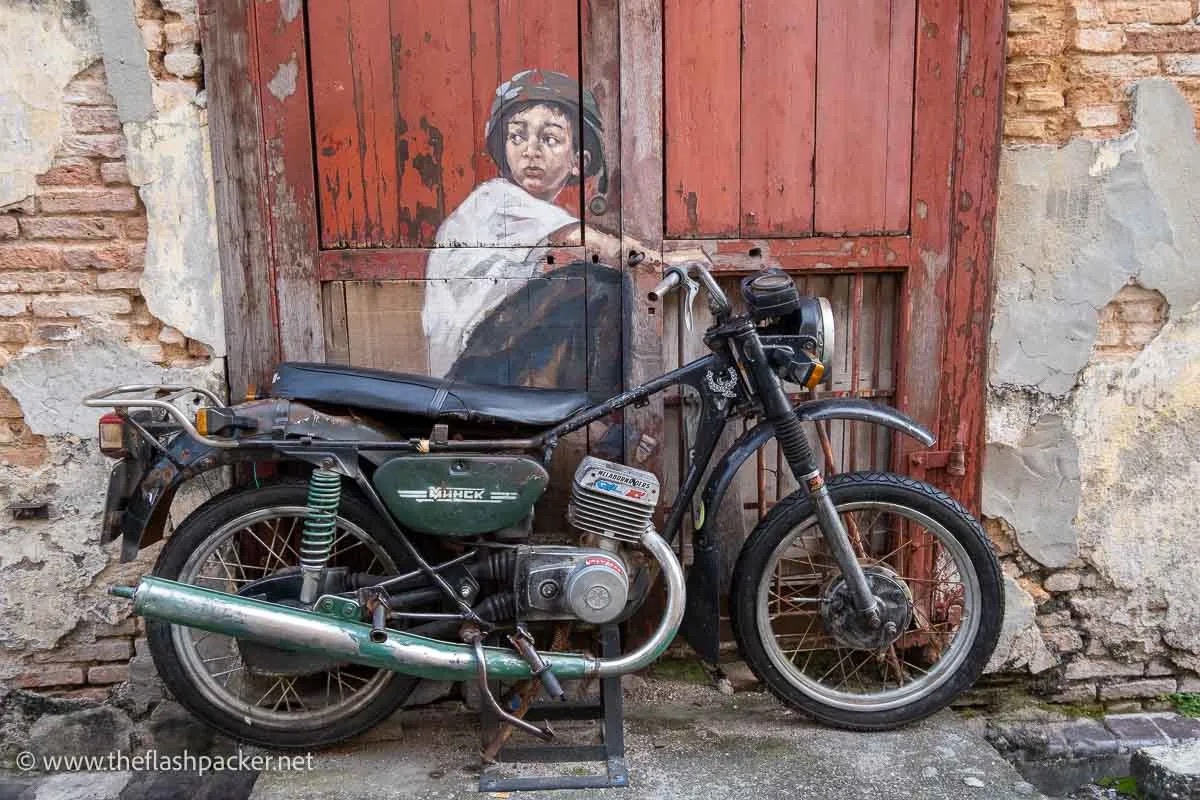
Boy on Motorbike (Ernest Zacharevic)
On Lebuh Ah Quee, a boy leans against a real vintage motorcycle. Another 2012 Zacharevic piece, and one of the most photographed. Expect to wait your turn during peak hours, as visitors queue to straddle the bike. The mural is right next to Little Boy With Pet Dinosaur, another Zacharevic work that has badly deteriorated, which gives you a sense of what the tropical climate does to outdoor art over a decade.
Address: 12, Lebuh Ah Quee, 10300 George Town
The wire rod sculptures
Do not skip the iron rod installations. The 2009 Marking George Town competition produced over fifty wrought-iron caricatures that narrate the trade history of specific streets. Look for the one showing two tourists in a rickshaw holding a Penang food trail map, and the one of two men carrying a float on their shoulders while a third snaps a photo from a window. They are lit up at night, which is when most visitors miss them.
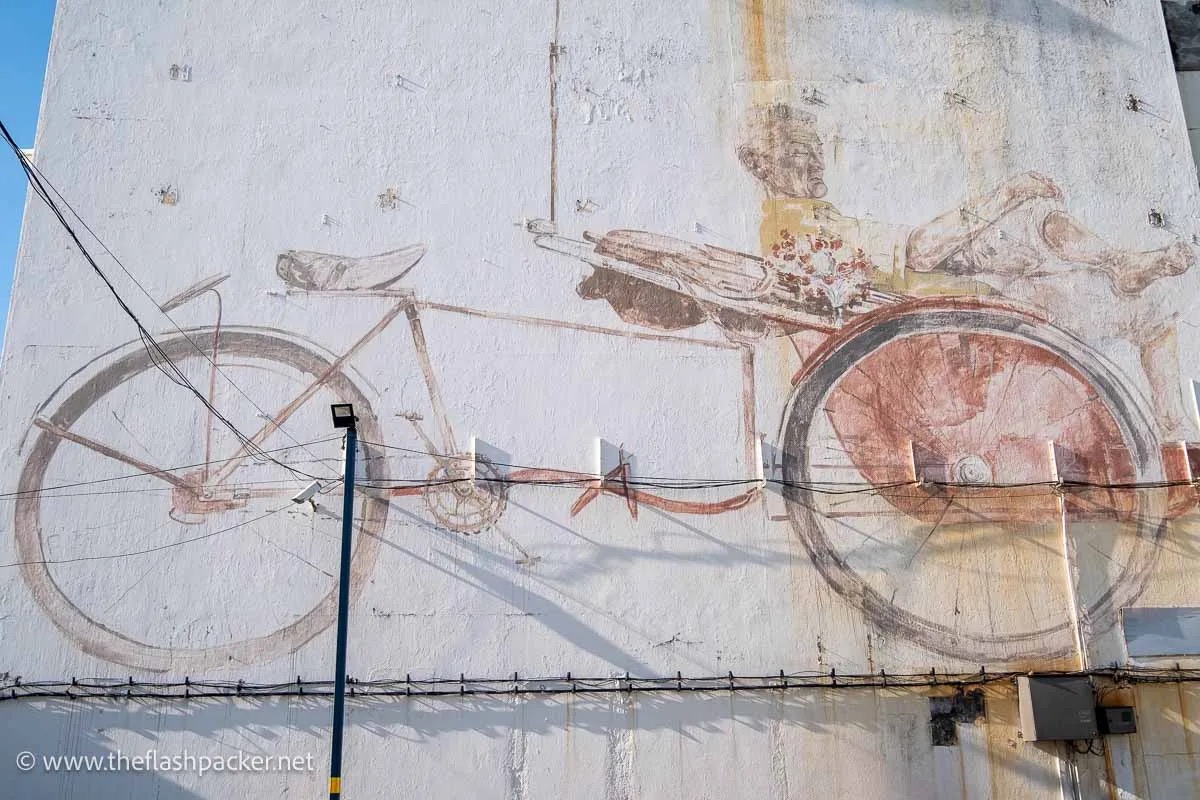
The Trishaw Man mural above Trishaw Corner, where the drivers actually congregate, is a Zacharevic piece that has faded badly but still stands as a tribute to the men who pedal tourists around the heritage zone.
The walking trail
Concentrate your time on the area around Armenian Street (Lebuh Armenian) and Muntri and Chulia Streets (Lebuh Chulia and Lebuh Muntri), where the highest concentration of murals sits within a one-mile radius. A sensible route starts at Brother and Sister on Swing at 63 Gat Lebuh Chulia, runs through Armenian Street for the Zacharevic classics, loops through Lorong Stewart for Julia Volchkova's Indian Boatman, and finishes near the clan jetties.
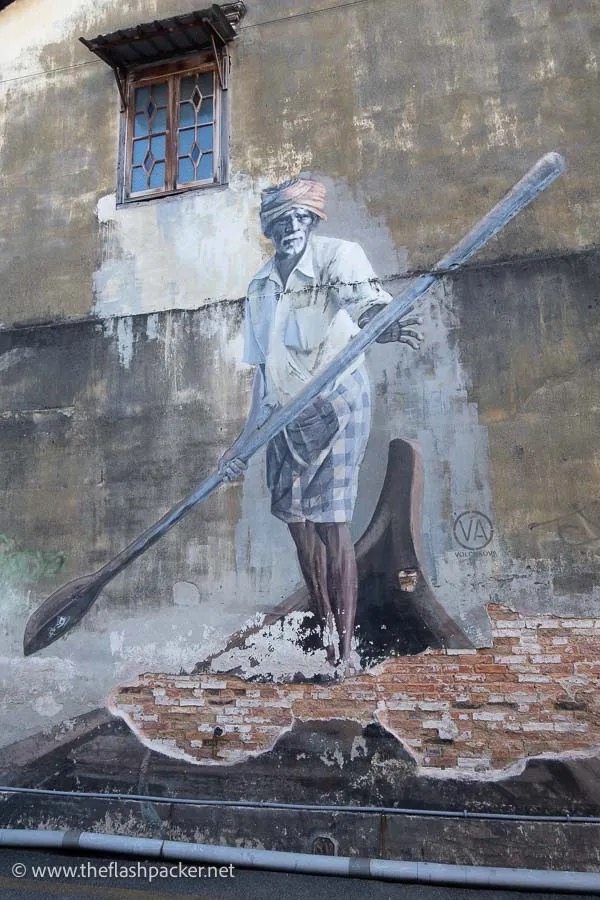
The Indian Boatman, painted in 2014 by Russian muralist Julia Volchkova, celebrates the role Stewart Lane played in George Town's maritime history. The scale is remarkable, but it is the concentration on the boatman's weathered face that stays with you.
Practical tips
Set out before 9am or after 4pm. Between those hours, the heat is brutal and the photo spots are packed. Pick up the free street art map at most hotels and tourist offices, which covers the better-known murals. Have realistic expectations: the tropical climate takes its toll, and several murals have deteriorated badly since they were painted. Zacharevic himself returned to retouch some of them, but the passage of time is visible.
Do not try to see everything. A return visit will still leave murals undiscovered. Focus on the Armenian Street cluster, grab a coffee on Lebuh Chulia, and let yourself wander. The joy of George Town's street art is finding a piece you were not looking for in an alley you did not intend to walk down.